aojiTrip
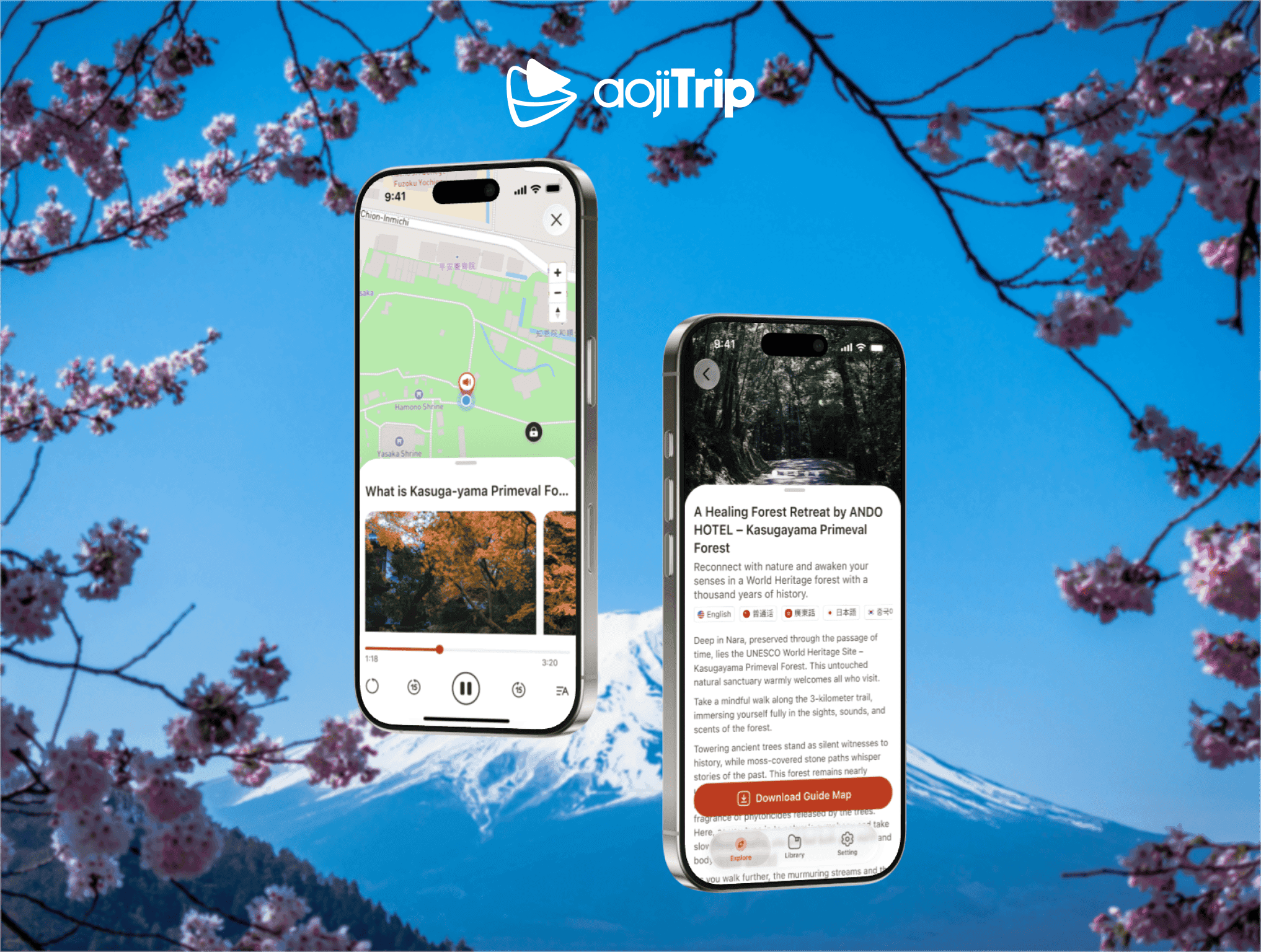
aojiTrip is a mobile app that provides immersive walking experiences for tourists visiting Japan. The app combines location-based guidebooks and audio storytelling to help travelers discover the culture, history, and hidden stories of places as they explore them.
Instead of traditional guided tours, aojiTrip allows travelers to freely walk through cities, temples, and natural sites while listening to contextual audio stories that deepen their understanding of the location. The service is designed for inbound travelers seeking authentic cultural experiences beyond typical sightseeing routes.
The project originated from a hotel partner requesting a custom solution for a guided walking experience. An initial version was developed without a designer, focusing on basic functionality. I redesigned the product to improve usability and transform it into a scalable platform that can be used by multiple hotels and sightseeing partners.
COMPANY
BuddyCompass, a Japan-based branding company focused on uncovering cultural, historical, and entertainment assets across Japan
MY ROLE
UI/UX Designer
TEAM
UI/UX Designer (me)
Brand Designer
2 Software Engineers
CEO
Business Development
SCOPE
UX research & persona development
Mobile app UX & UI design
Design system creation
Interactive prototype
Landing page creation
TIMELINE
4 months (Jan - Apr 2025): Mobile App
2 months (Jun-Jul 2025): Landing Page
TOOLS
Figma
ChatGPT (Research)
CHALLENGE
Creating a digital solution that allows visitors to discover cultural context and local stories in an accessible, self-paced, and immersive way
Japan has many cultural and historical assets, but local tourism operators often struggle to transform them into engaging digital experiences for international visitors.
At the same time, travelers visiting Japan want to explore cultural stories and local history, but traditional tours feel restrictive and information is difficult to access while freely walking around.
SOLUTION
A location-based audio guide and walking experience platform
aojiTrip was designed as a mobile platform that delivers immersive audio storytelling tied to real-world locations. Users can scan QR codes placed at hotels or tourist facilities to access curated walking routes and audio guides, allowing them to explore nearby areas independently.
DESIGN PROCESS
From defining the product vision to delivering a scalable mobile experience
1
Target Segment
Referred to existing inbound tourism data and the hotel partner’s target guests to define the initial audience.
Since the project originated from an upscale boutique hotel looking to offer guests a guided walking experience, we focused on inbound travelers from higher-spending segments who are interested in exploring nearby cultural destinations independently.
Language accessibility was also a key consideration, as the hotel needed a way to make local stories and cultural context easier for international visitors to understand.

Persona
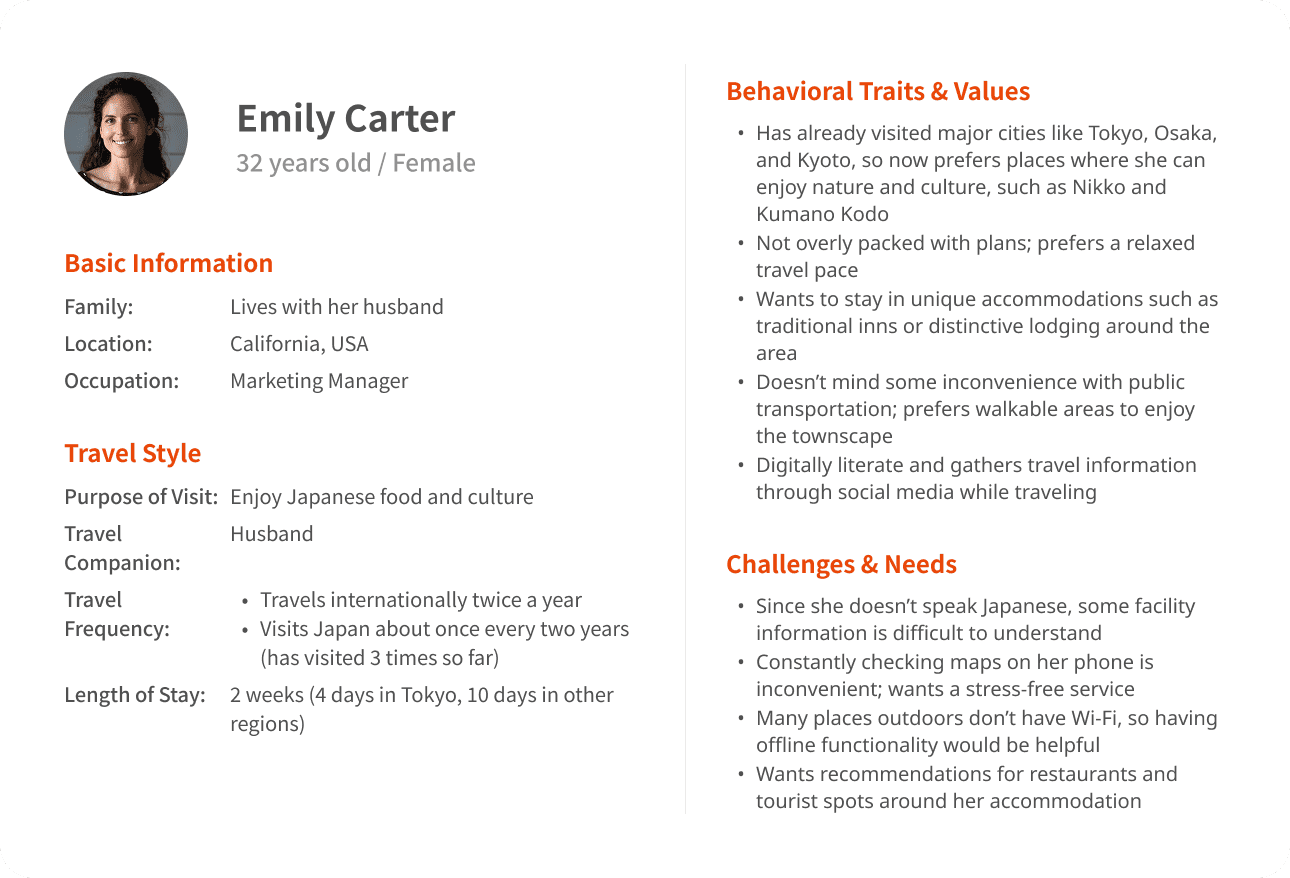
Defined target users and created personas to understand how travelers explore cultural destinations and what challenges they face.
Research
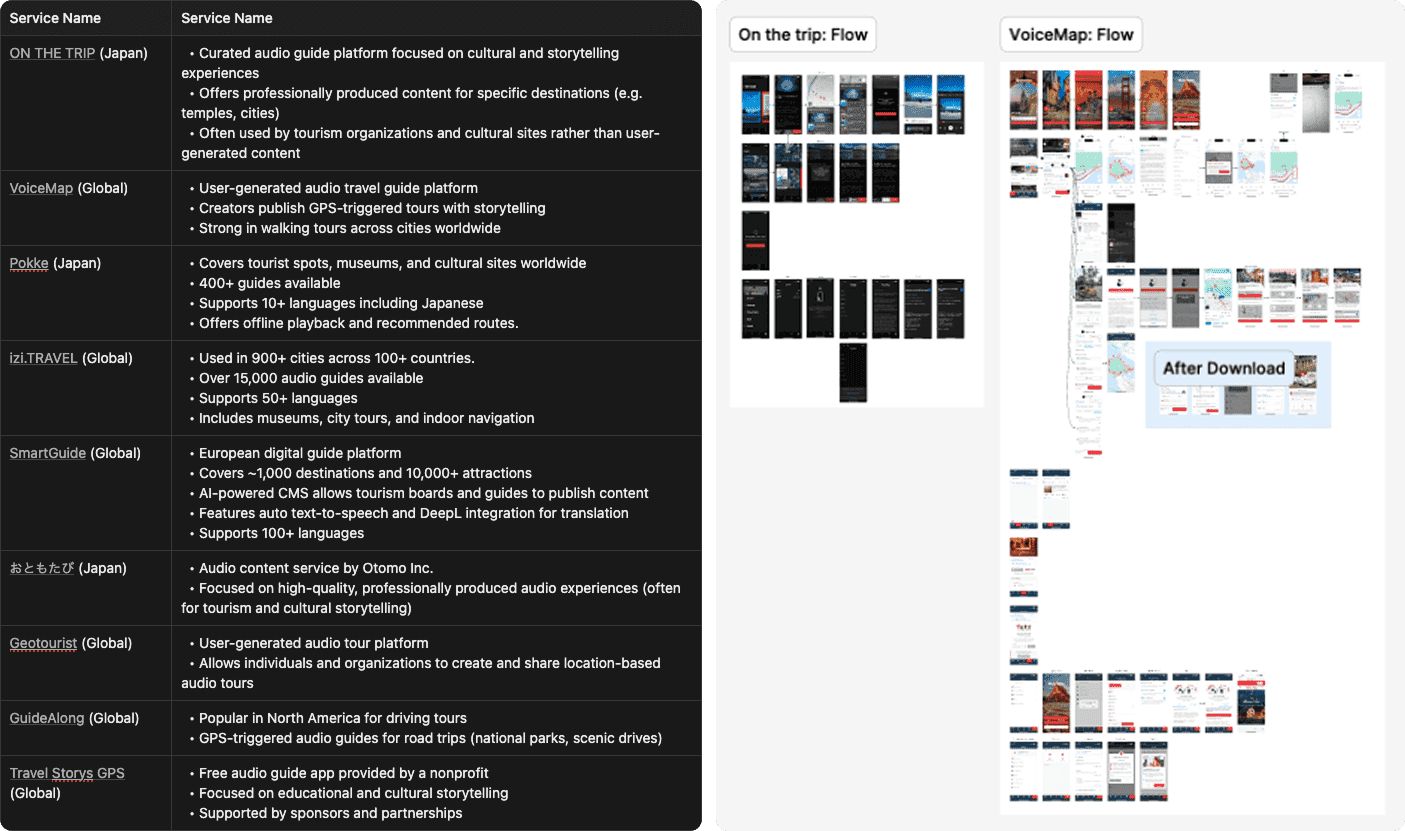
Conducted competitor analysis to learn common user flows and features in travel and guide apps, identifying gaps in accessibility and immersion.
Due to timeline constraints, I prioritized secondary research over user interviews to move quickly.
2
Product Strategy & MVP
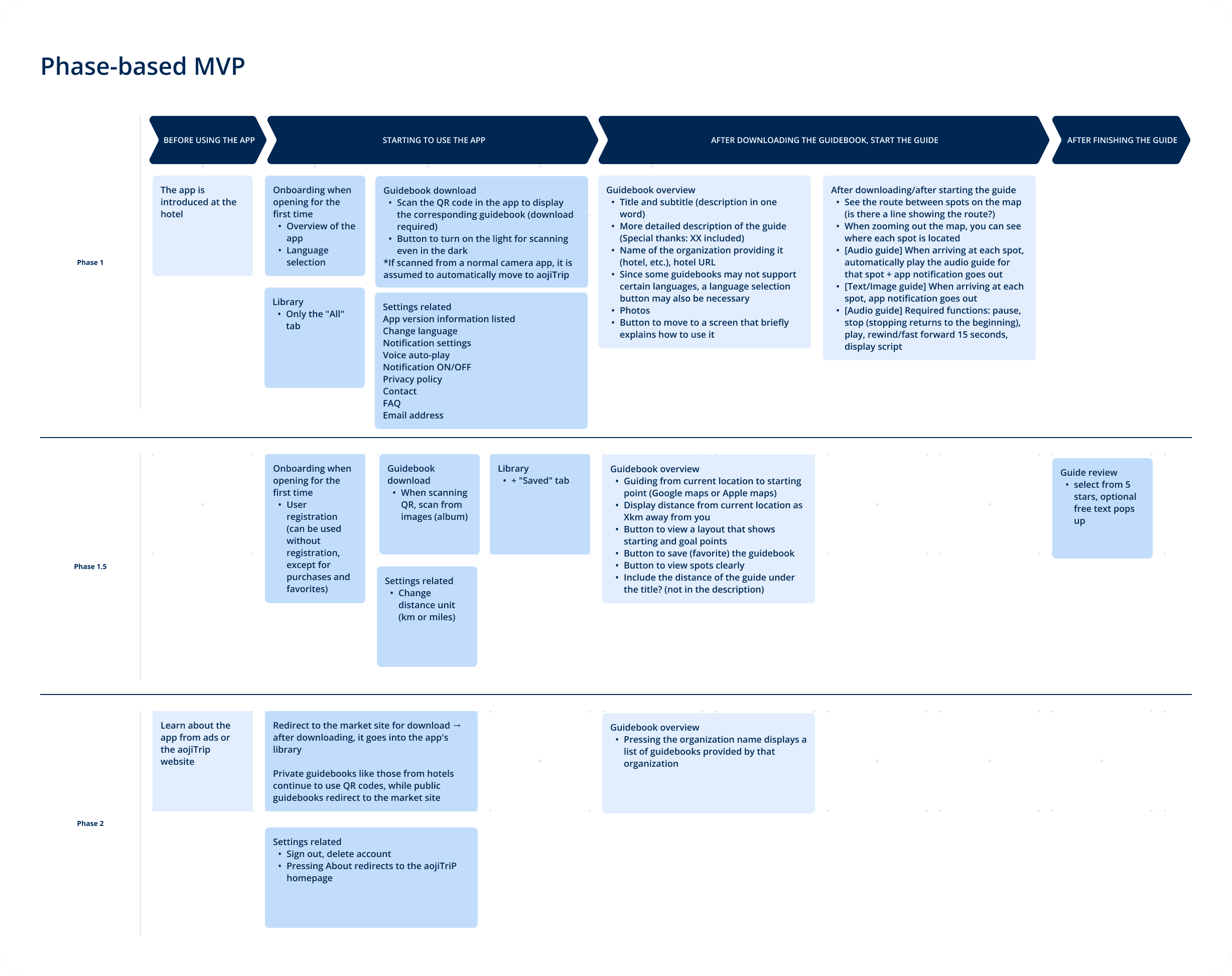
Defined the product direction and core features, shaping the app from a single hotel use case into a scalable platform for tourism partners.
Established the MVP by focusing on key user needs such as self-guided exploration, audio storytelling, and QR-based onboarding.
3
Mood Board
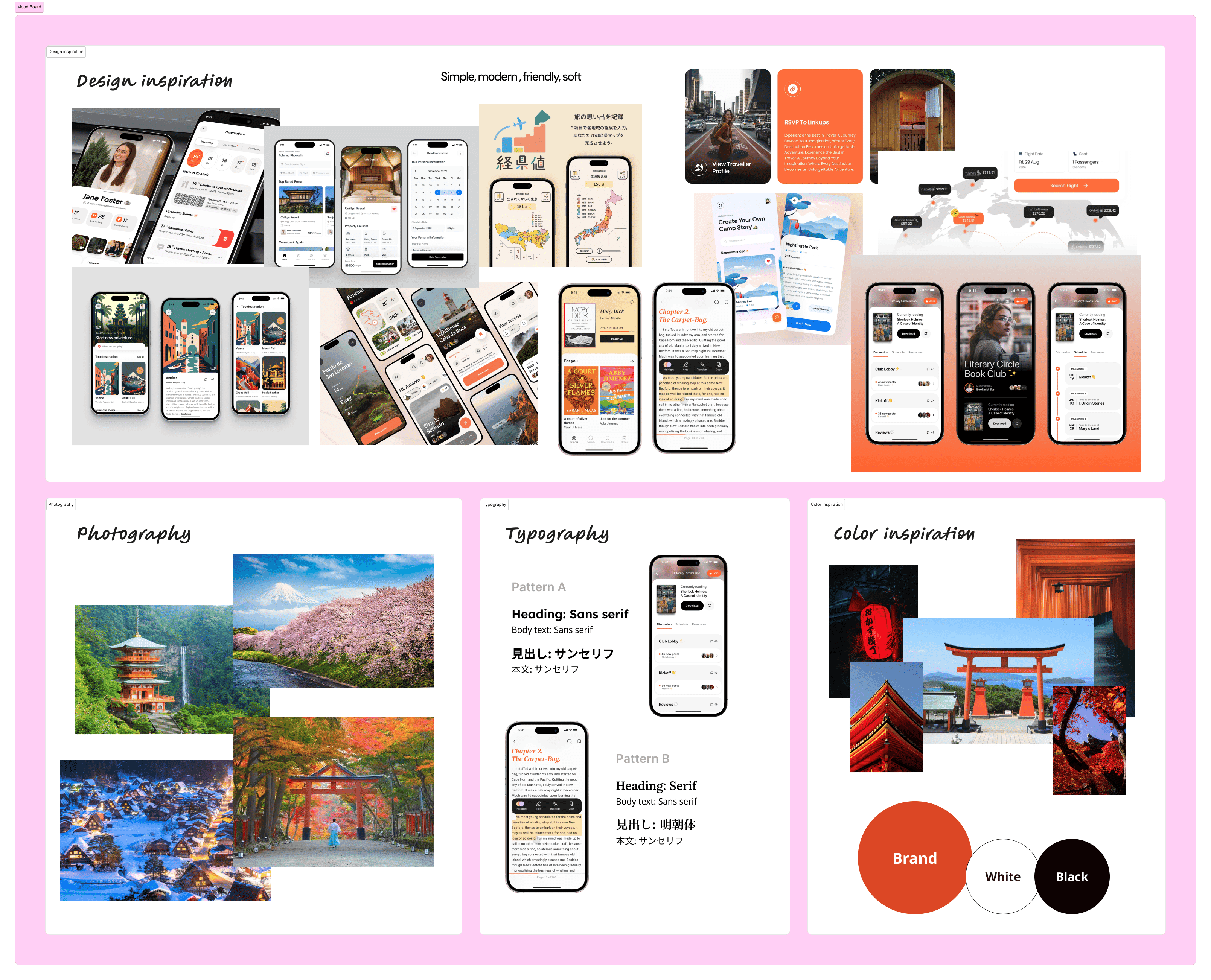
Created a mood board to define the visual direction, including color palette, typography, and tone.
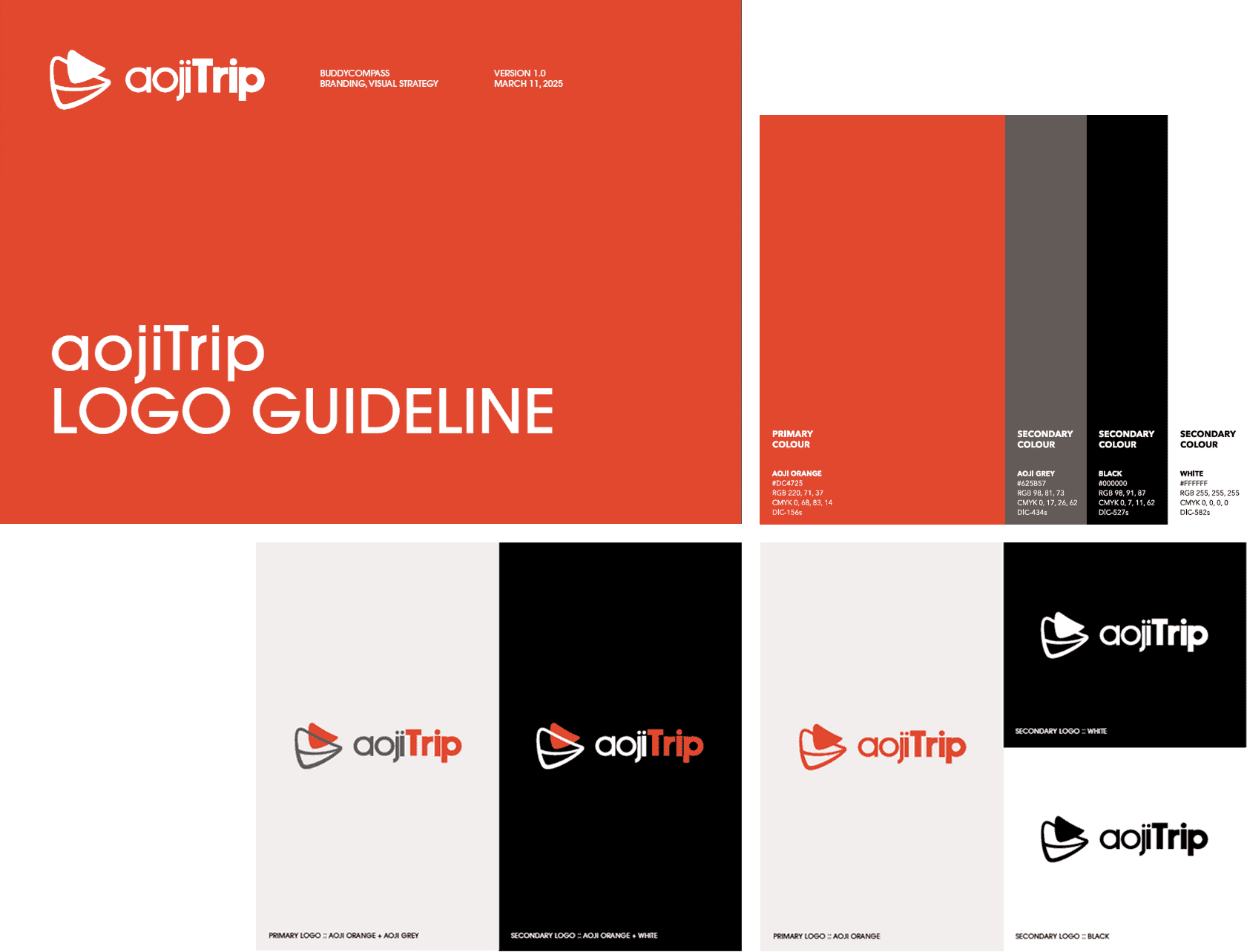
Logo & Brand Guidelines
Collaborated with a brand designer to align the product with the overall brand identity and guidelines.
4
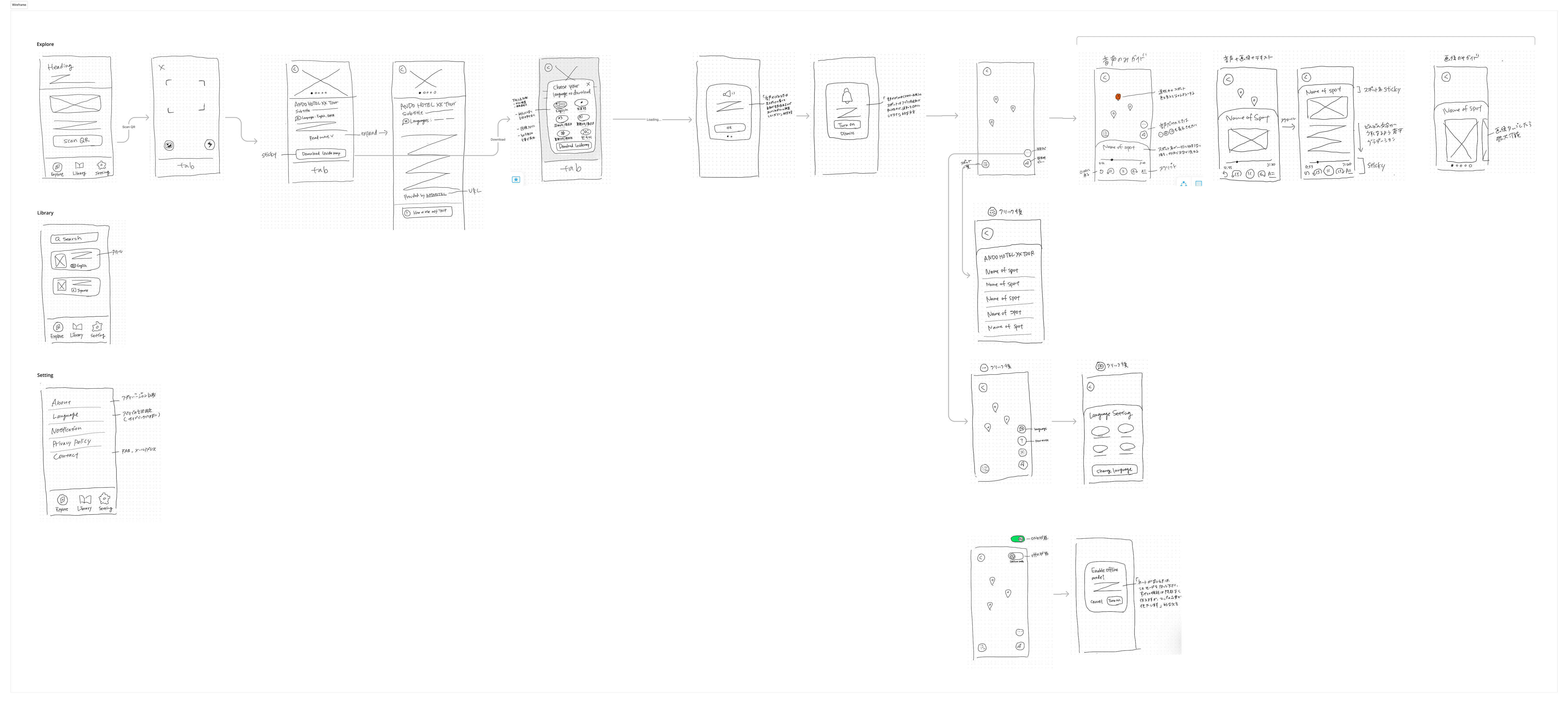
Wireframes
Designed wireframes and user flows for key features such as QR entry, map navigation, and audio playback.
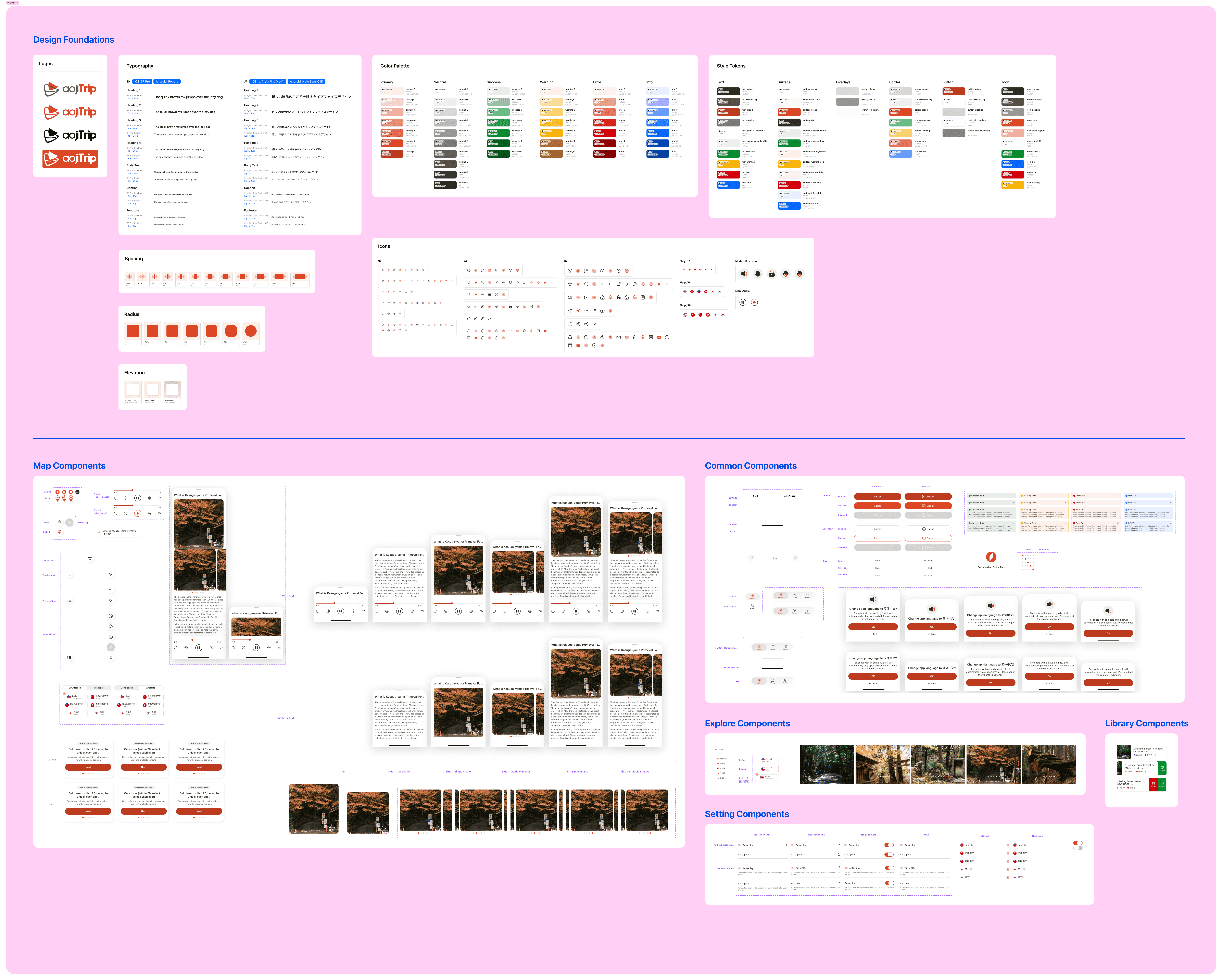
Design System
Developed a scalable design system using Figma Variables to ensure consistency across screens and support adaptation for different partners and use cases.
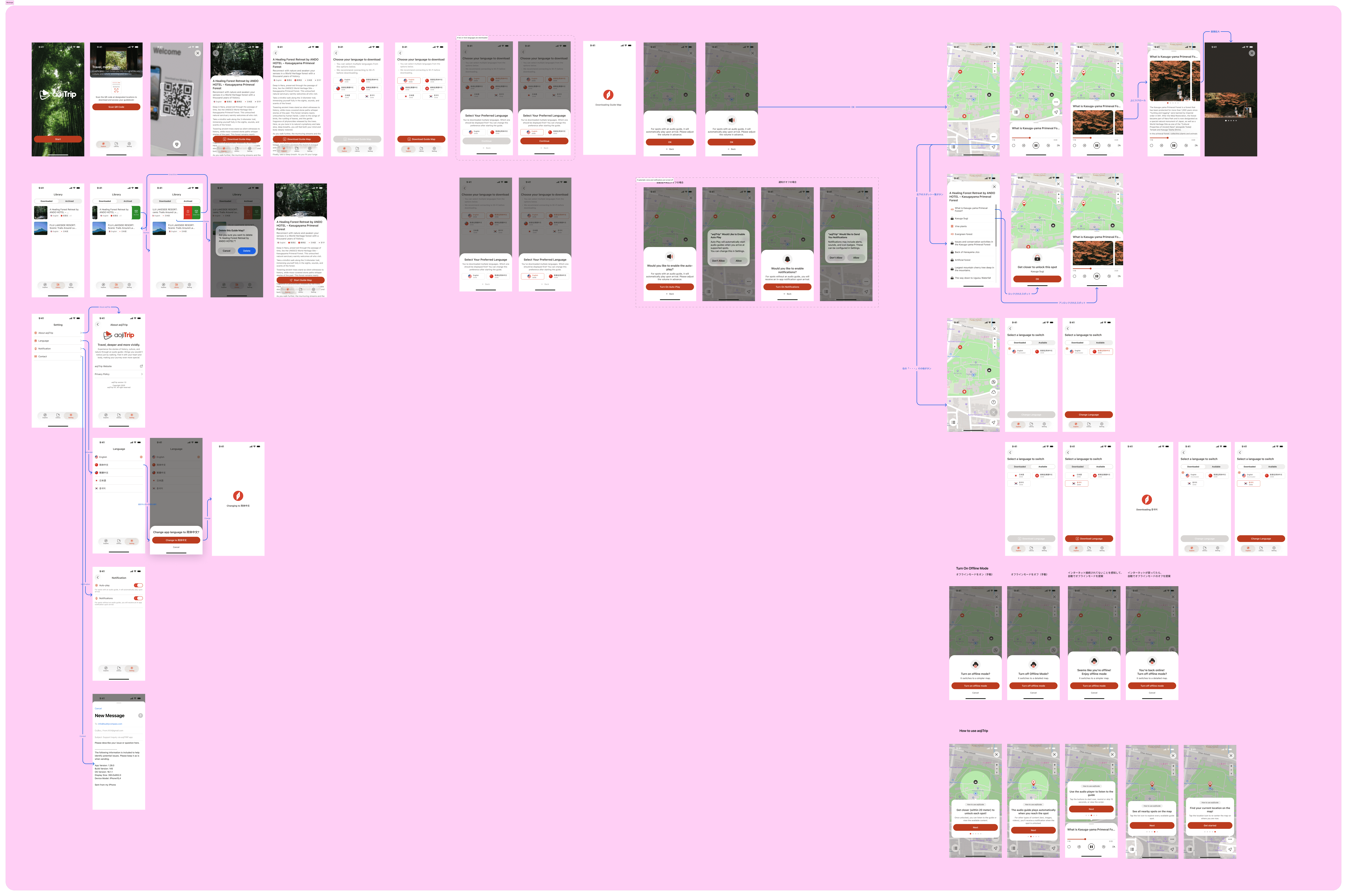
Mockups
Created high-fidelity mockups to visualize the end-to-end user experience, ensuring clarity, consistency, and usability across key flows from scanning a QR code and downloading guide maps to map-based navigation.
5
Prototyping
Created interactive prototypes to simulate the end-to-end experience.

6
Partner Landing Page
Designed a landing page for potential hotel and tourism partners in Japan to communicate the value of aojiTrip as a guided walking experience. The page explains how partners can use the app to offer guests a more immersive way to explore nearby cultural destinations.
DESIGN DECISIONS
Designing for On-the-Go Usage
Since aojiTrip is used while walking outdoors, the interface was designed for quick, one-handed interactions. Key actions are placed within easy reach, and visual noise is minimized so users can stay focused on their surroundings rather than the screen.
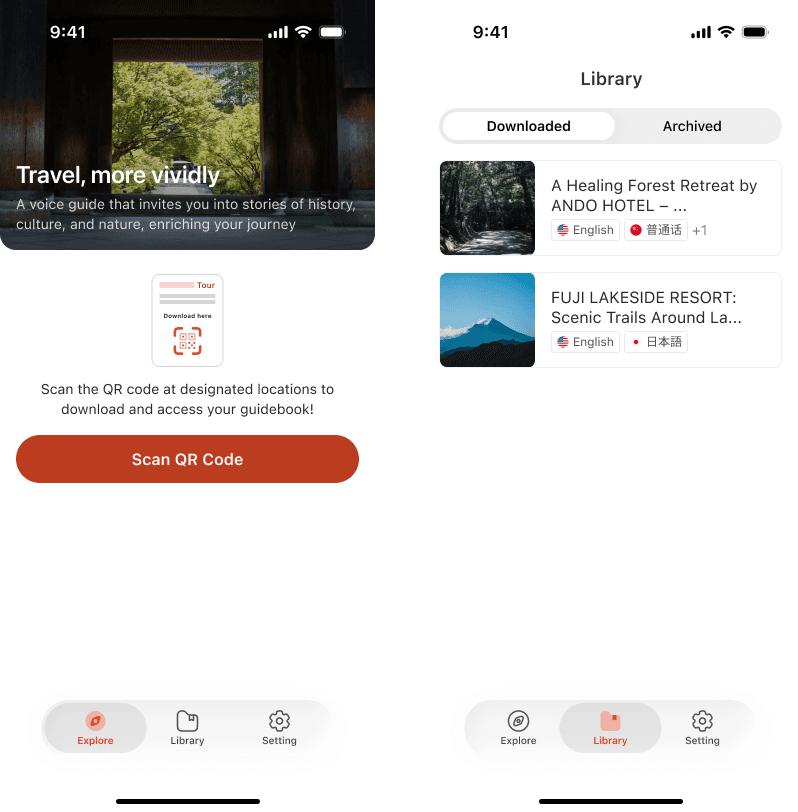
Optimizing the Default Entry Point
Originally, the Library tab was set as the default screen based on an early developer-built demo created before I joined. I changed this to the Explore tab to better guide first-time users on what to do. Since users need to scan a QR code to access content, prioritizing Explore makes the entry point clearer and creates a more intuitive onboarding experience.
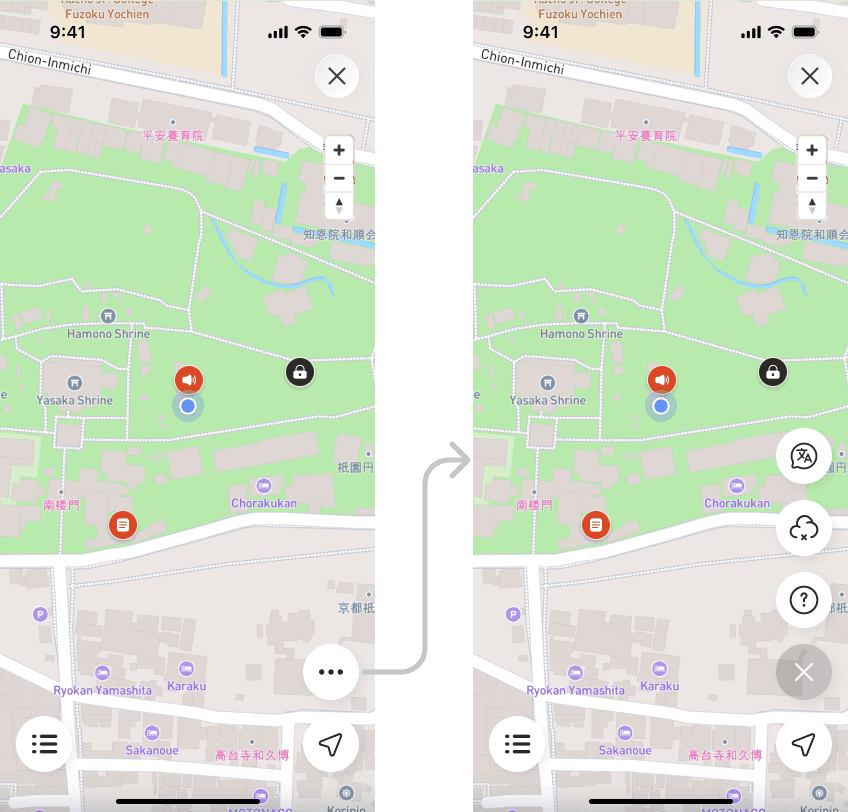
Prioritizing Map Visibility
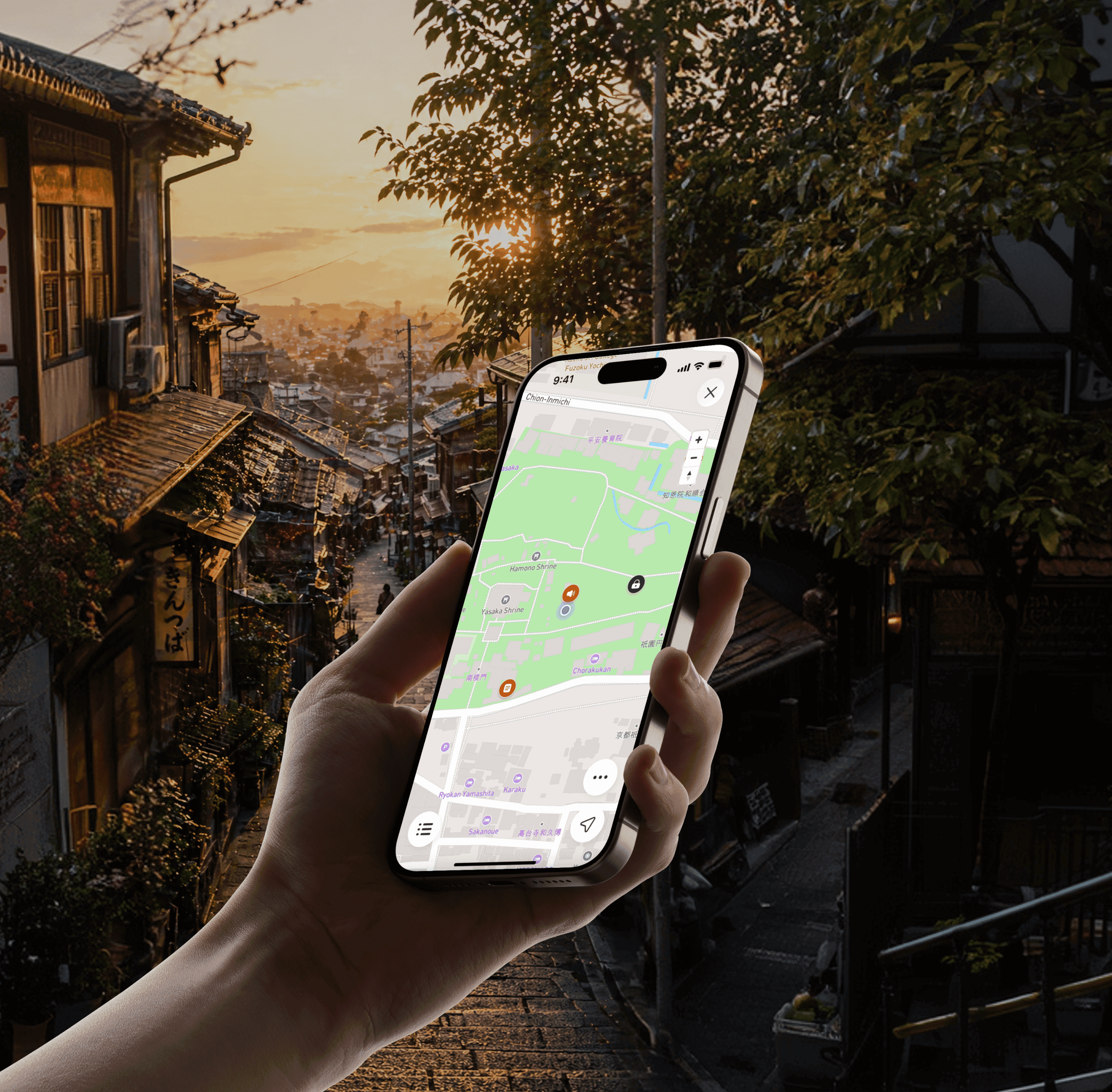
The map screen was designed to be as clean as possible, minimizing UI elements that block the view, as these can frustrate users during navigation. Lower-priority actions, such as language switching, offline mode, and usage guidance, were grouped under a “…” menu to reduce visual noise. This allowed key actions, like viewing the list of spots and accessing the current location, to remain easily accessible, supporting a more focused and intuitive map experience.

OUTCOME
A scalable foundation for a partner-driven tourism platform
The project transformed an initial proof-of-concept into a scalable product that enables hotels and sightseeing partners to deliver customized, location-based audio guide experiences.
Designed to support a partner-driven model, the platform allows each new collaboration to expand its content and overall value, laying the groundwork for future growth. As the product is in its early stage of partner onboarding, meaningful user metrics are not yet available.
FUTURE OPPPORTUNITIES
Exploring ways to validate, refine, and scale the experience
If the product continues to grow, these are the areas I would explore next:
Validate the persona through interviews or surveys with real inbound travelers
Test the app in real walking scenarios to see how users interact with the map and audio guide
Gather feedback from hotel and tourism partners in Japan to understand what types of stories, routes, and cultural content their guests would be most interested in
Explore how the experience could adapt to different partner types, such as hotels, temples, and local tourism boards
Track key metrics after launch, including QR scans, guidebook downloads, audio plays, and partner inquiries
Other Projects:
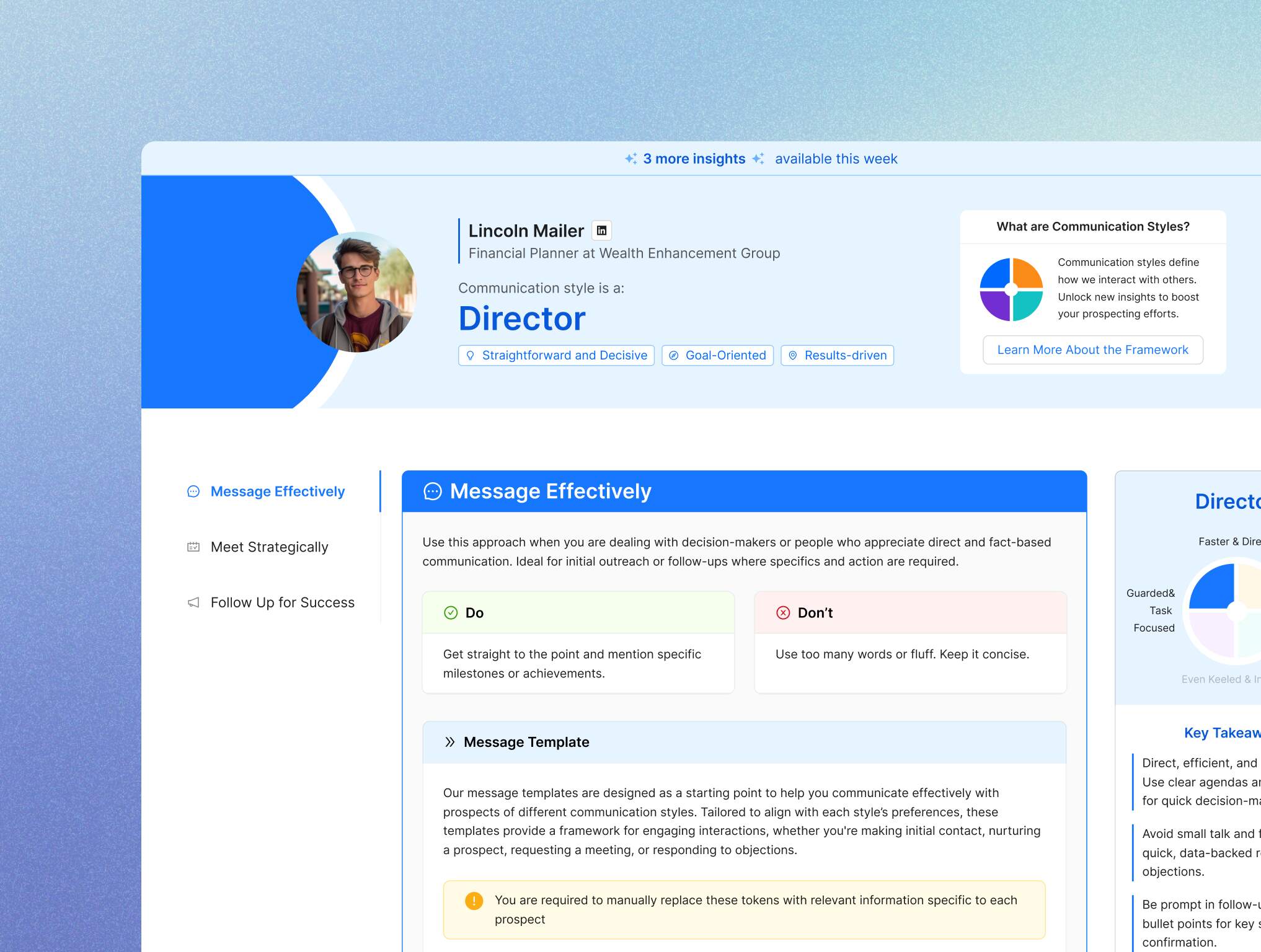
Personalized Insights
Redesigned the Personalized Insights feature for outbound sales professionals to help them better understand leads and apply insights directly to their sales process.
2024
AI Feature
Chrome Extension
Onboarding Emails
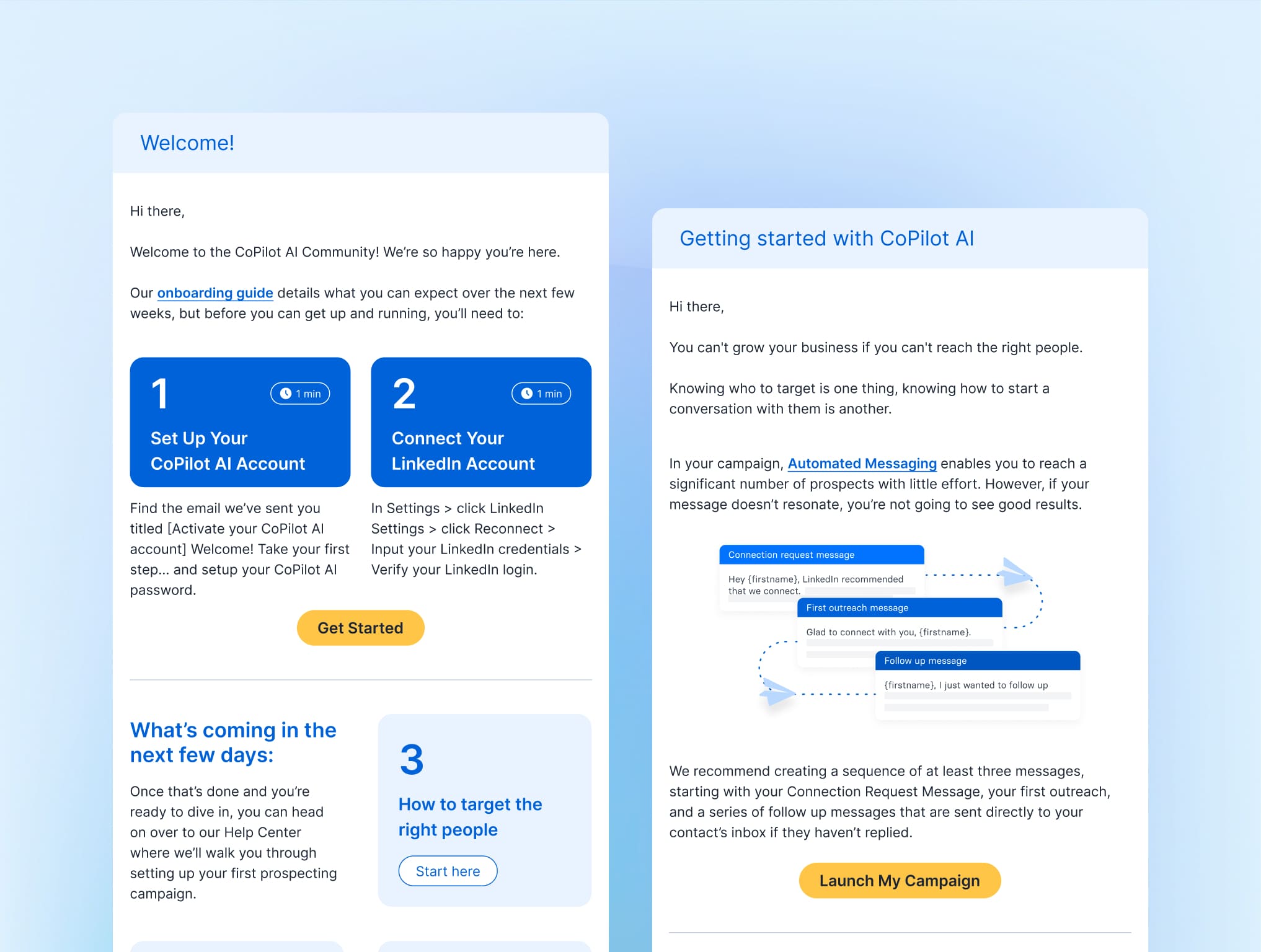
Redesigned welcome emails to improve the first impression after sign-up, making the communication clearer, more engaging, and better aligned with the product experience.
2024
Email Design
Coding